Acceptance and Commitment Therapy
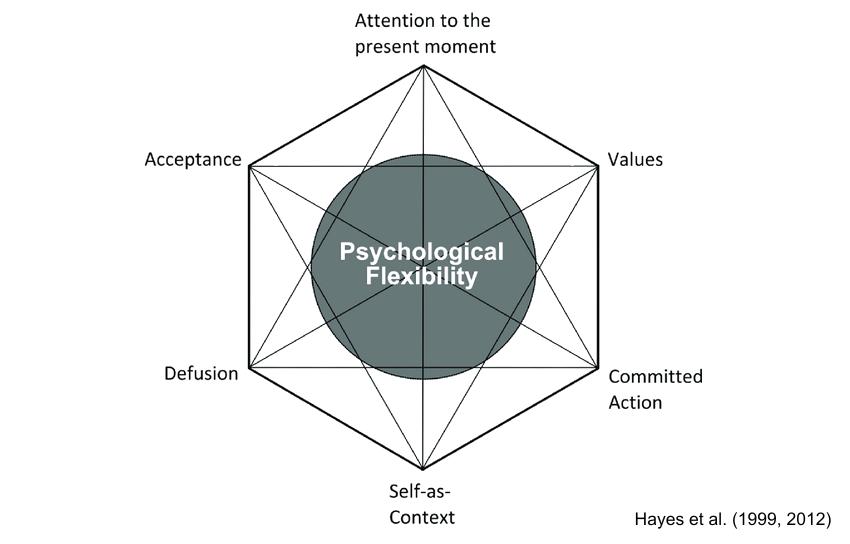
Acceptance and Commitment Therapy (ACT) is an evidence based, respectful, and person centred third-wave Cognitive Behavioural Therapy (CBT) that focusses on supporting its participants with developing psychological flexibility and wellbeing through the use of mindfulness skills (no, not necessarily meditation!), values, and committed action. Throughout her years of practice, Jessica started to notice that the people coming along for support were often stuck in common areas:
Being overwhelmed by, fighting with, or avoiding their internal experiences (i.e., thoughts, feelings, memories, sensations, urges) - the opposite of acceptance
Living in auto-pilot - the opposite of getting present
Having lost touch with their interests, qualities or strengths, or their sense of purpose and direction - the opposite of being guided by ones values
Feeling stuck and unsure of what to do or how to move forward - the opposite of being guided by ones values and engaging with committed action
Not being able to see past, or have any separation from, their internal experiences - the opposite of self-as-context
Experiencing their thoughts as always true and factual and in the drivers seat, with thoughts that are often very critical (of self and others) - the opposite of defusion from thoughts (with some added self-compassion for good measure)
As shown in the image and text above, Jessica discovered how effective ACT and its 6 core ‘hexaflex’ processes are in supporting clients to develop a more mindful and meaningful life, through enhancing their psychological flexibility and subsequent wellbeing.
ACT is different to traditional CBT, in that it does not try to neutralise, change, or ‘get rid of’ our difficult thoughts and feelings, rather it works to change our relationship with them, so they have less impact and influence over us.
ACT is a transdiagnostic approach, meaning that it can be helpful for a range of difficulties and diagnoses. ACT is considered evidence based in supporting people experiencing:
Anxiety
Depression
Bipolar Disorder
Chronic Pain
Obsessive Compulsive Disorder (OCD)
Psychosis
Substance Use
Tinnitus related distress
Sleep issues and insomnia
Some eating and body image concerns, and
Non-clinical difficulties including stress
ACT is considered trauma informed and neurodiverse affirming, and can be easily adapted to suit people of various ages and life stages, for example, children, teens, and for parents in the perinatal period.
If you are interested in exploring more, Russ Harris, Author and ACT Trainer, has some great explanations and free resources regarding ACT via his ACT Mindfully website.